
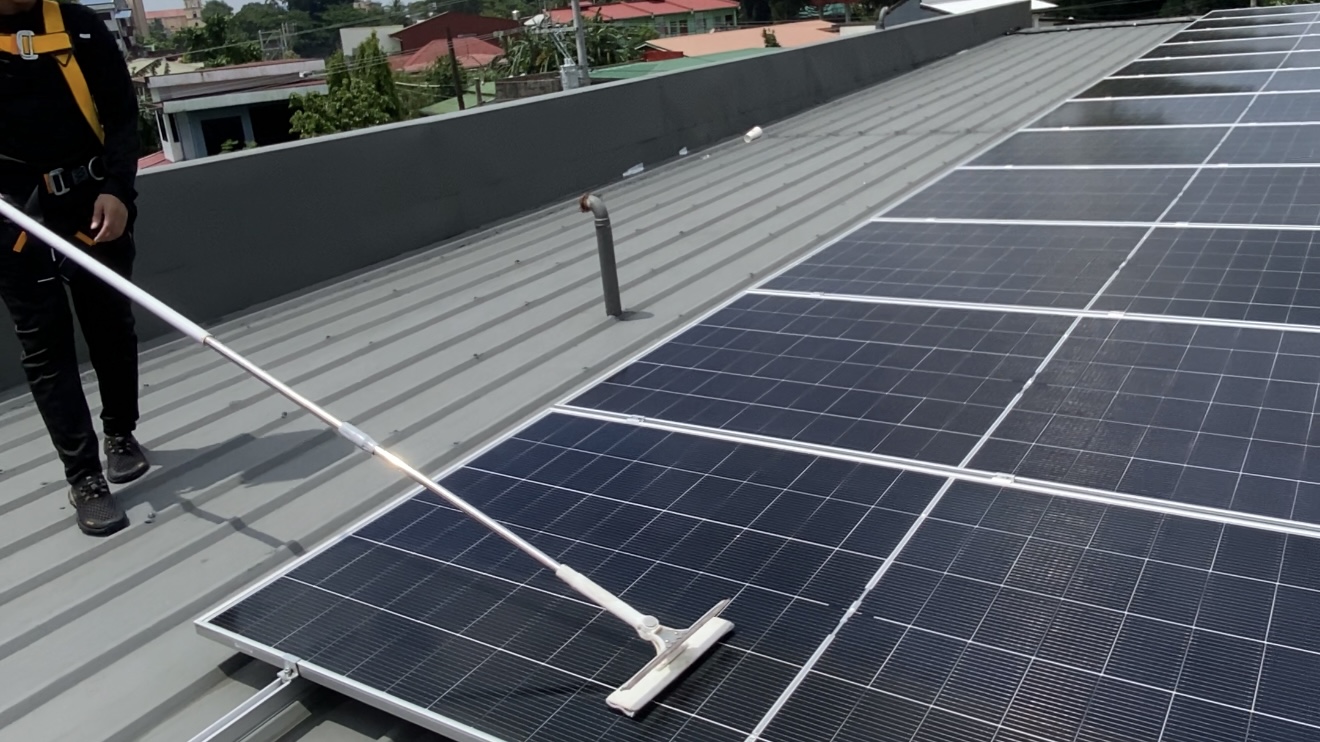
New solar panel owners often assume protection is something to think about later, once the excitement of a fresh installation has settled. In the Philippines specifically, that delay can cost more than people expect, simply because of how fast local conditions start working against unprotected glass.
What Starts Happening From Day One
Intense UV exposure, monsoon rain, and everyday pollution don't wait for a convenient time to start affecting your panels. Even brand-new glass begins accumulating dust and mineral residue immediately, and repeated UV exposure gradually affects the surface over time regardless of how new the system is.
Why Newer Panels Actually Coat Better
Coating actually performs best on glass that's still in good condition, which isn't what most people expect. A NanoTech coating bonds at a molecular level, and that bond is strongest on a clean, undamaged surface — not one that's already accumulated months or years of micro-wear. Waiting until panels look dirty or worn means the coating has a less ideal surface to work with from the start.
Does Waiting Actually Save Anything?
Not meaningfully. The cost of coating doesn't decrease by waiting, and every month without protection is a month of unprotected exposure to dust, UV, and rain. If anything, waiting risks needing a more intensive deep clean first to restore the surface before coating can be applied effectively.
What About Manufacturer Warranties?
Our coating is applied only at the surface level — no connections, wiring, or panel internals are involved — which is why installers generally have no issue with it being applied to new systems. Worth confirming with your specific installer, but this typically isn't a conflict. Full details on the coating process are on our NanoTech coating service page.
Frequently Asked Questions
How soon after installation can panels be coated?
As soon as the panels are clean and the installation is complete — there's no required waiting period. Getting it done early is generally the more effective approach, before any dust or residue has had time to build up on the surface.
Does coating new panels void the manufacturer's warranty?
Generally no, since the coating only affects the surface-level glass and doesn't involve any electrical connections or internal components. It's still worth a quick check with your specific installer to confirm their individual policy, since terms can vary between manufacturers and installation contracts.
Is deep cleaning necessary before coating brand-new panels?
Usually minimal, if any, since new panels haven't had time to accumulate heavy buildup. A quick professional inspection during the assessment will confirm whether any cleaning is needed before coating is applied, keeping the overall process quick and efficient for brand-new installations.
Will coating change how my new panels look?
No — the coating is fully transparent and doesn't alter the panel's appearance at all, whether applied to a new or existing system. It only affects performance and how the surface interacts with dust and water, leaving the visual finish exactly as it was.
