
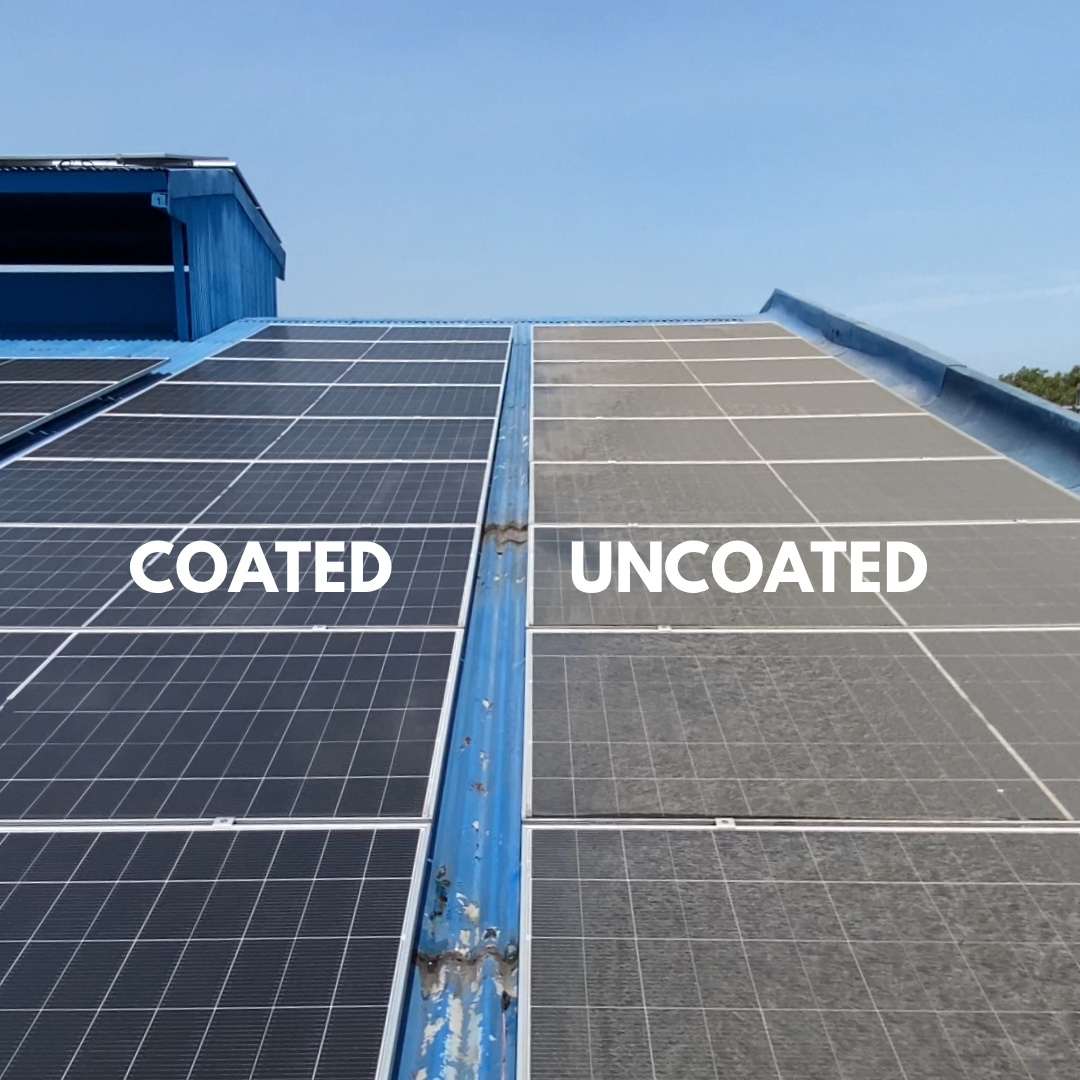
Two identical solar systems, installed the same week, sitting under the same sun. A year later, one is quietly producing more power, needs a fraction of the maintenance, and still looks close to new. The only difference between them is a single, nearly invisible layer. That's the entire case for NanoTech coating, and it's worth seeing side by side rather than just taking our word for it.
The Core Difference: One Layer That Changes Everything
An uncoated panel is just glass over a solar cell — effective, but fully exposed to dust, static, hard water, and organic grime with nothing working in its favor between cleanings. A coated panel has a thin, transparent layer bonded to that glass with four active properties: anti-reflective, anti-static, photocatalytic, and superhydrophilic. None of it is visible to the eye. All of it is measurable in performance.
| Factor | Uncoated Panel | Coated by StarShield |
|---|---|---|
| Light absorption | More light reflects away unused | Anti-reflective layer lets more usable sunlight in |
| Dust buildup | Dust clings freely to the surface | Anti-static property gives dust less to grip |
| Rain behavior | Water beads and pools, leaving spots | Water sheets off evenly, carrying dust away |
| Organic grime | Accumulates until manually removed | Sunlight helps break it down automatically |
| Cleaning frequency needed | Every 2–4 months | No manual cleaning needed — water rinse only, during dry spells |
| Output vs. a spotless clean panel | Baseline at best | 2–8% beyond baseline |
| Long-term protection | None — starts degrading again immediately after cleaning | Lasts 5–10+ years; 3-year warranty guaranteed |
The Part Most People Miss: Coating Beats a Spotless Uncoated Panel
This is the detail that surprises most homeowners. It's not just "coated panels stay cleaner." A freshly, perfectly cleaned uncoated panel still loses to a coated one, because the anti-reflective property itself increases how much usable light reaches the cell — independent of cleanliness. That's where the 2–8% output boost comes from: it's not just about staying clean, it's about the glass itself performing better.
What Happens Over Time
The gap between coated and uncoated widens the longer a system runs. An uncoated panel follows the same cycle indefinitely: clean, degrade, clean again, with output dipping in between every time. A coated panel holds closer to its peak for far longer between services, and the manual cleaning that does happen tends to be faster and less intensive, since there's less for grime to hold onto in the first place.
Life After Coating: What Maintenance Actually Looks Like
Once a panel is coated, there's no more manual brushing, scrubbing, or chemical cleaning needed — the part that surprises most owners. The coating's self-cleaning properties handle everyday dust and grime on their own. The only maintenance most owners ever need is a plain water rinse during extended stretches with no rain — no tools, no chemicals, and no technician required for that part.
How Long Does the Coating Actually Last?
With proper application, the coating typically lasts a minimum of 5 years, and often performs well past 10 years, depending on how much dirt and pollution buildup your specific location sees. Coastal, industrial, or high-traffic urban sites tend to sit at the shorter end of that range; cleaner, less exposed locations often get the longest life out of it. This is also why Ultimate Protection's 3-year warranty exists as a guaranteed minimum commitment — the coating is very often still performing well beyond that window, but we back it formally for the first 3 years regardless of how your specific site performs.
Is Coating Right for Every System?
Almost always yes, with one honest caveat: coating works best applied to glass that's still in good condition. Heavily degraded or already-scratched glass won't get the same benefit, since the coating enhances a healthy surface rather than repairing a damaged one. This is also why we recommend coating sooner rather than later — newer panels in good condition get the fullest, longest-lasting benefit.
Frequently Asked Questions
Can I add coating later if I only get cleaning now?
Yes — our Standard and Ultimate Protection packages both include coating, and it can be added to a system that's previously only had cleaning, as long as the glass is in good condition. There's no need to have started with coating from day one to benefit from adding it now.
Does coating wear off over time?
All coatings gradually weather with prolonged sun and environmental exposure, which is why Ultimate Protection includes a 3-year warranty and annual inspections to catch and address this proactively. Real-world lifespan typically runs 5 to 10-plus years depending on your specific site conditions.
Is the performance difference really noticeable, or just theoretical?
It's measurable, not theoretical — we compare real production data from your own solar app before and after every service, which is where our verified 20–23% average recovery figure comes from. That figure is an average across 5,000+ panels, though — individual results can run considerably higher, with one verified case reaching 66.2%. The 2–8% coating boost is measured the same way, against a spotless uncoated panel.
Does coating change how the panels look?
No — the coating is fully transparent and doesn't alter the panel's appearance, only its performance and how it interacts with dust and water. Visually, a coated panel looks identical to an uncoated one both before and after application.
Do coating the panels void their warranty?
It depends on the installer, but almost all of our clients' installers have had no issue with our coating. Since it's applied only at the surface level — no connections, wiring, panel openings, or inverters are involved — it typically falls outside what a manufacturer's warranty would even cover in the first place.
