
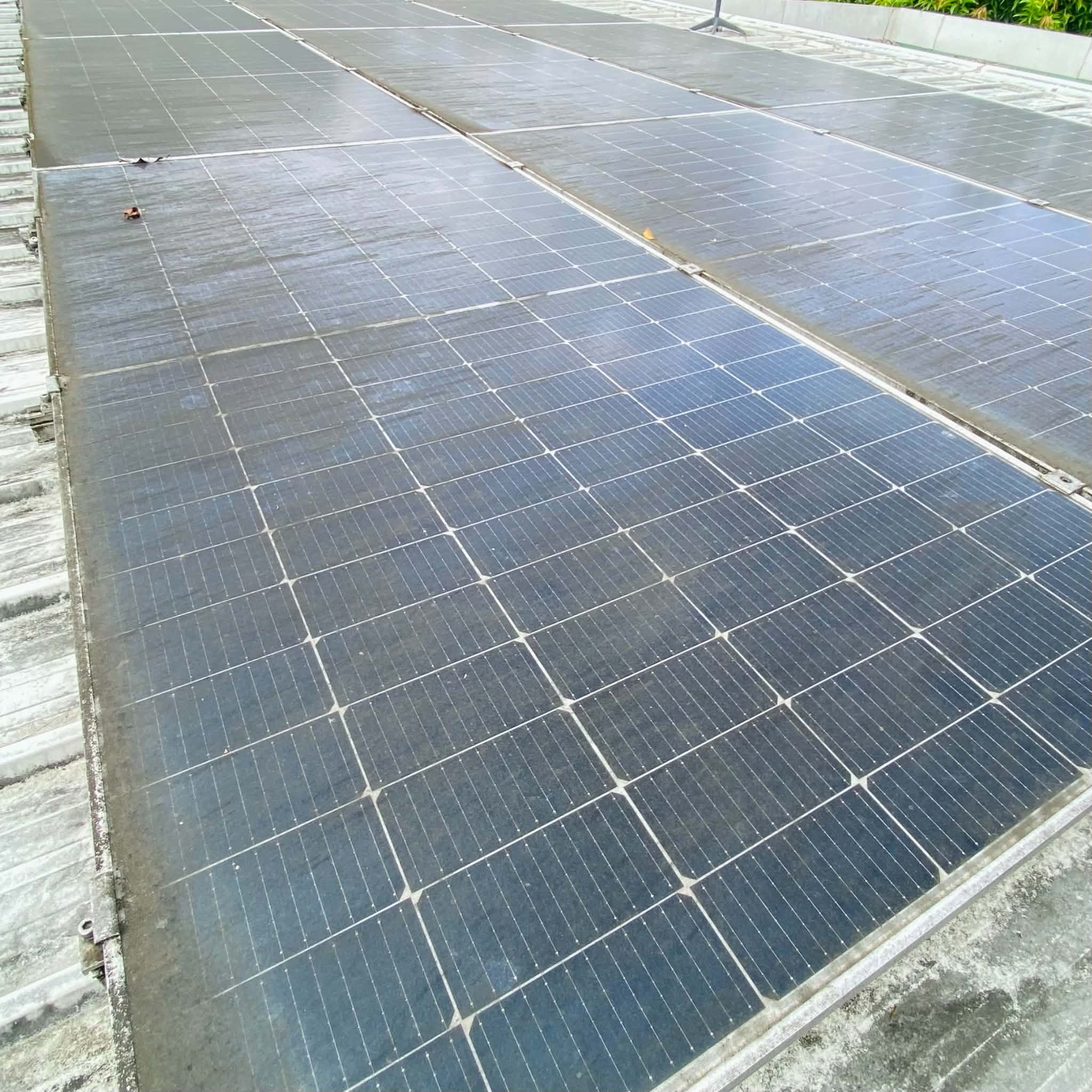
"Don't worry, the rain will clean it." If you own solar panels in the Philippines, you've probably said this yourself, or heard it from a neighbor, an installer, or a well-meaning uncle at a family gathering. It's one of the most widely believed things about solar maintenance — and it's only partly true, in a way that can quietly cost you money for months without you noticing.
The Myth: "Rain Does the Job For Me"
The logic seems sound on the surface. Water falls on the panel, water is wet, wet things get clean — so a good downpour should reset your panels to spotless, right? If that were fully true, professional panel cleaning wouldn't exist as an industry anywhere it rains. It does, including in some of the rainiest countries on Earth.
What Rain Actually Does to Dirty Panels
Rain removes loose surface dust reasonably well — the light, dry particles that haven't bonded to the glass yet. But most of what accumulates on a panel over weeks isn't loose dust. It's a mix of dust, vehicle exhaust residue, pollen, and in many parts of Metro Manila and nearby provinces, fine particulate from nearby construction or traffic. That mixture doesn't simply rinse away — it partially dissolves, spreads across the surface, and dries into a thin film once the sun comes back out.
Why Light Rain Can Actually Make It Worse
Here's what almost nobody expects: a light drizzle can leave panels looking worse than before it rained. Just enough water falls to mix with the dust and smear it into a hazy film, but not enough to actually rinse it off the glass. Once that film dries under the sun, it can be harder to remove than the original dry dust was, and it sits directly in the path of sunlight your panels are trying to absorb.
When Rain Actually Helps
Heavy, sustained rain does help — there's enough volume and force to physically wash debris off rather than just mixing with it. This is more common during typhoon season than during the scattered light showers of a typical rainy afternoon. But even then, rain isn't selective. It won't remove bird droppings, sap, or hard water mineral spots, all of which need to be manually addressed regardless of how much it rains.
How NanoTech Coating Changes the Rain Equation
This is where the myth becomes closer to true — but only with the right surface treatment. Our NanoTech coating includes a superhydrophilic property, meaning water doesn't bead up and sit on the glass the way it does on an untreated panel. Instead, it sheets off evenly across the entire surface, physically carrying dust along with it as it goes. On a coated panel, rain becomes an active cleaning mechanism instead of a passive, unreliable one. On an uncoated panel, it's mostly a coin flip. You can see the full details on our NanoTech coating service page.
Frequently Asked Questions
So should I stop relying on rain completely?
Not entirely — heavy rain does help remove loose debris. Just don't treat it as a substitute for actual cleaning, especially for anything beyond light dust. Think of rain as a helpful bonus on top of regular cleaning, not a replacement for it.
Does distilled or "clean" rainwater make a difference?
Rainwater itself is relatively pure, but it still picks up airborne particles on the way down and mixes with whatever is already on the glass, which is what limits its cleaning power. The coating's surface properties matter far more than the water's purity in determining how effectively it cleans.
Will rain remove bird droppings or tree sap?
Usually not on its own. These bond to the glass surface in a way that typically needs an actual cleaning to fully remove. Leaving them in place for extended periods can also create localized shading that reduces output from the affected cells.
Does this myth apply the same way during typhoon season?
Not quite — typhoon season brings its own set of considerations, including debris and storm runoff, which is different enough from ordinary rain that it deserves its own explanation. We cover that specifically in our typhoon season guide.
