
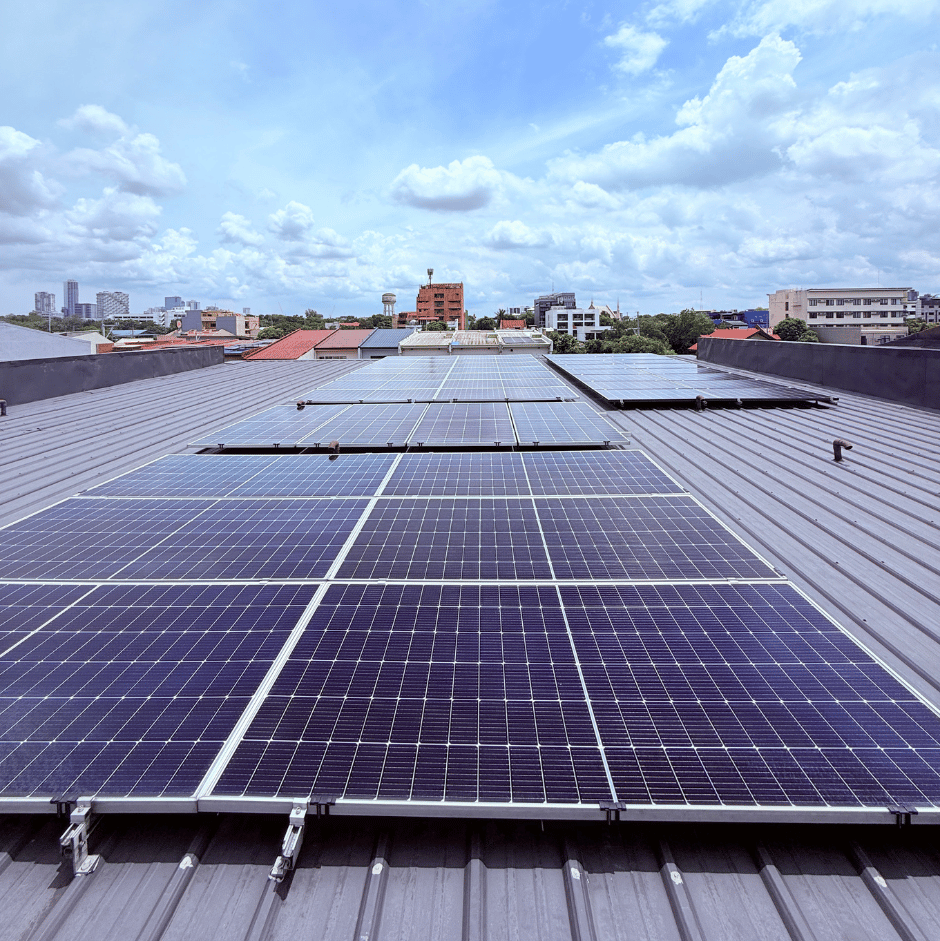
Solar panels don't fail loudly. They just quietly produce less power every month you don't clean them — and most owners never notice until they compare bills or check their solar app's production history. So how often should you actually be cleaning?
The General Rule of Thumb
For most residential systems in urban or dusty areas of the Philippines, every 3 to 6 months is a reasonable baseline for manual cleaning. Systems in cleaner, low-dust environments can sometimes stretch longer; systems near construction sites, unpaved roads, or industrial areas often need it sooner.
Factors That Change Your Ideal Schedule
Location and surrounding environment
Panels near busy roads, construction, or industrial zones accumulate grime faster than panels in quieter residential areas. Coastal properties can also deal with salt residue, which behaves differently from ordinary dust.
Roof angle
Flatter installations collect and hold dust longer than steeply angled ones, since gravity and rain don't help clear debris as effectively.
Nearby trees and vegetation
Leaf litter, sap, and bird activity from overhanging trees are a common, often-overlooked cause of localized soiling and even shading on specific panels.
Season
Dry season allows dust to build up steadily with nothing to wash it away. Rainy season helps, but rain alone doesn't fully clean panels — it often just adds a filmy residue as dust mixes with water and dries, which is a different problem than dry dust and still reduces output.
Why NanoTech Coating Changes the Equation
A self-cleaning coating doesn't eliminate maintenance entirely, but it fundamentally changes how often you need to think about it. Our NanoTech coating works through four properties:
- Anti-reflective — reduces light reflection so panels absorb more usable sunlight.
- Anti-static — suppresses static charge, so fine dust particles have less surface to cling to in the first place.
- Photocatalytic — uses sunlight itself to automatically break down organic dirt and stains.
- Superhydrophilic — causes water to sheet off evenly rather than bead up, carrying dust away with it every time it rains, instead of leaving the residue film that plain rain leaves on uncoated glass.
The result is a panel that's actively resisting buildup between services, rather than passively collecting it — which is why coated systems typically need far less frequent manual intervention than uncoated ones.
Signs Your Panels Need Cleaning Now
- Visible dust, film, or streaking on the glass surface
- A noticeable drop in daily production compared to the same period last year, visible in your solar app
- It's been longer than 6 months since the last professional clean
- Recent nearby construction, or an unusually dry stretch of weather
Cleaning Frequency by Property Type
The "3 to 6 months" baseline shifts depending on what kind of system you're running:
- Residential (typically 15–30 panels) — usually the easiest to keep on a predictable schedule, since access is simpler and soiling patterns are more consistent.
- Commercial rooftops (30–100+ panels) — often need closer monitoring since commercial areas can have more dust, exhaust, or nearby activity than a typical residential street.
- Industrial installations (100–500+ panels) — frequently sit near operations that generate their own particulate matter, which can mean a shorter interval between cleanings than the general guideline suggests, even with a coating applied.
How to Monitor Your Panels Between Cleanings
You don't have to guess. Most solar inverter apps show daily and monthly production history — the same data we use to verify results before and after every StarShield service. A steady, gradual decline in output over several weeks, with no other explanation like unusually cloudy weather, is usually soiling. Comparing the same month year-over-year is often the clearest signal, since it removes seasonal sunlight variation from the picture. If it's time for a professional visit, our solar panel cleaning service covers homes, businesses, and industrial sites across Luzon.
Frequently Asked Questions
Can I just wait for rain instead of cleaning?
Rain helps but doesn't fully clean panels on its own — it often leaves a filmy residue as airborne dust mixes with water and dries on the glass, which still reduces output even though the panel looks "rained on" and cared for.
Does a NanoTech coating mean I never need to clean again?
No — it dramatically reduces how often manual cleaning is needed by helping the panel resist and shed dust on its own, but very heavy buildup (like nearby construction dust) can still benefit from periodic servicing. Most coated systems only need an occasional water rinse rather than a full professional cleaning cycle.
How do I know if my drop in output is from dirty panels or something else?
Compare your current production to the same month last year, if your app has that history. A gradual decline with no major weather or equipment changes is the classic signature of soiling rather than a hardware issue. A sudden, sharp drop instead usually points to something mechanical worth having inspected separately.
Is more frequent cleaning always better?
Not necessarily — unnecessary manual cleaning adds cost and rooftop-access risk without meaningful benefit if panels aren't actually soiled yet. Monitoring your actual production data is a better guide than cleaning on a rigid calendar regardless of real conditions, since the right frequency varies by location and season.
