
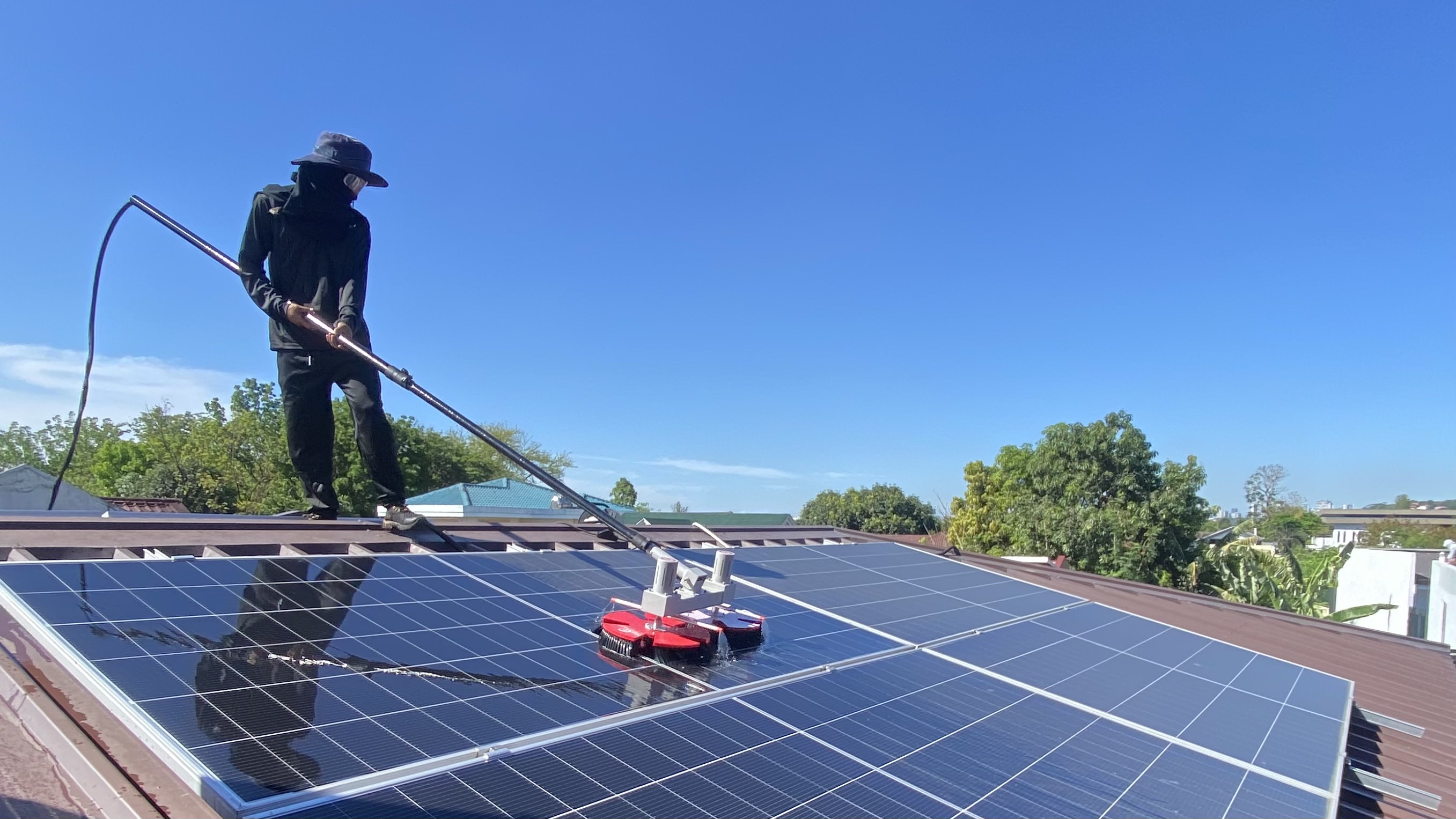
Most guides to "increasing solar output" focus on installation choices — panel angle, inverter sizing, that sort of thing. Useful information, but not much help once your system is already installed and running. This one focuses on what actually moves the needle for a system you already own.
Two Levers, Not One
Output loss happens for two separate reasons that often get lumped together. The first is physical blockage: dust, dirt, pollen, and residue sitting between sunlight and the cell. The second is reflection: even perfectly clean glass reflects away a portion of usable light before it ever reaches the cell underneath. Cleaning solves the first problem. Only a coating addresses the second.
What You Can Control Starting Today
Check your solar app's production history against the same period last year. A gradual decline with no obvious explanation is usually blockage-related, and it's the easiest of the two problems to fix — a proper cleaning restores baseline output almost immediately.
The Ceiling Cleaning Alone Can't Break Through
Here's the part that trips people up: a spotless, freshly cleaned panel still isn't performing at its full potential. Standard glass simply reflects some light away, regardless of how clean it is. A NanoTech coating's anti-reflective property changes that physics, which is why coated panels measurably outperform even a perfectly maintained uncoated one. See the full details on our NanoTech coating service page.
Site Factors Worth Knowing About
Shading from nearby trees or buildings, panel orientation, and general roof exposure all set a ceiling on what any cleaning or coating can achieve — these are installation-level factors outside what a maintenance service controls. Within whatever ceiling your installation allows, cleaning and coating are what keep you consistently close to it.
Frequently Asked Questions
Which matters more for output, cleaning or coating?
They solve different problems, so neither replaces the other. Cleaning restores lost baseline from dirt and debris, while coating pushes output beyond that baseline through reduced reflection. Most owners get the best result from combining both rather than picking one over the other.
How quickly will I notice a difference after service?
Often within the first few days, visible directly in your solar app's daily production numbers. The exact size of the improvement depends on how much buildup had accumulated beforehand, and the overall condition of the panels going into the service itself.
Can old panels still see meaningful output gains?
Yes, as long as the glass itself is still in reasonably good condition. Age alone doesn't prevent a panel from responding well to cleaning or coating; heavy existing wear or scratching is what actually limits how much improvement is realistically possible.
Is there a limit to how much output can be recovered?
Your original installation specs set the real ceiling — no service can push a panel beyond its rated capacity. What cleaning and coating do is help you consistently reach closer to that ceiling instead of losing ground to dirt and reflection over time.
