
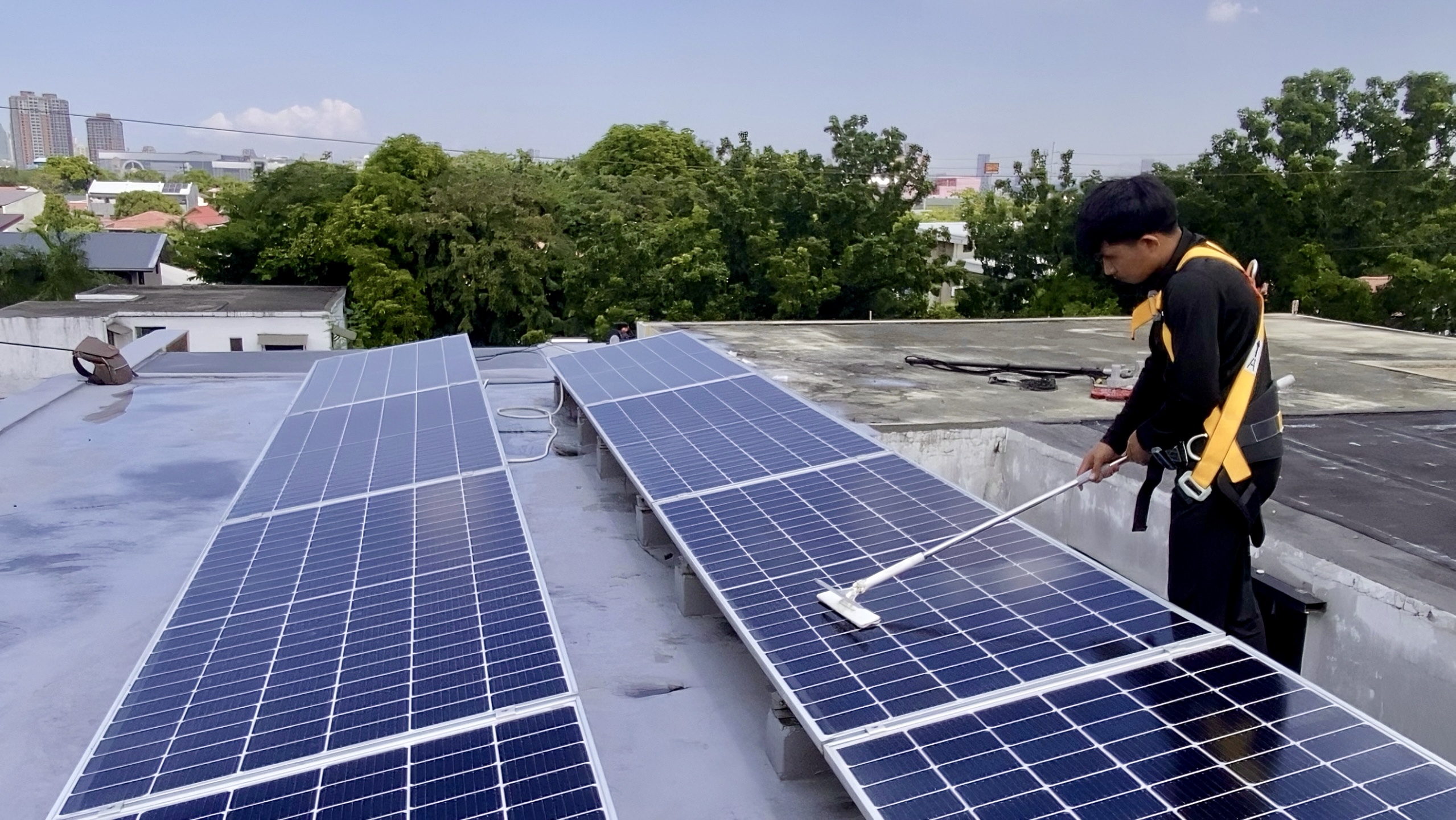
If you're going to clean your own solar panels, doing it correctly matters more than doing it often. Philippine dust, humidity, and intense midday sun each change how this should be done compared to a generic guide written for a different climate. Here's how to do it safely, step by step — plus where the real risks are, and when it's worth calling a professional instead.
What You'll Need
- A soft, non-abrasive cloth, sponge, or squeegee — never a stiff brush or scouring pad.
- Plain water — a garden hose with a gentle spray setting works best. Avoid harsh chemicals or detergents.
- A safe way to reach the panels — ideally without climbing onto the roof yourself.
Step-by-Step: How to Clean Your Solar Panels
- 1. Choose the right time of day. Early morning or early evening, never midday. Cold water on sun-heated glass can cause thermal shock and stress cracks that aren't immediately visible.
- 2. Turn off your system first. This is a standard safety precaution before touching any part of the array.
- 3. Remove loose debris. Gently brush away leaves, dust, and larger debris with a soft cloth before introducing water.
- 4. Rinse with plain water. Use a garden hose on a gentle setting — never a pressure washer, which can damage seals and force water into electrical components.
- 5. Wipe gently if needed. For stuck-on grime, use the soft cloth or squeegee with light pressure only. Never scrub hard.
- 6. Rinse again. A final rinse clears any remaining residue before it dries into streaks or spots.
- 7. Let it air dry. Avoid wiping dry with anything that could leave lint or scratches.
- 8. Turn your system back on. Confirm everything is functioning normally before you're done.
Cleaning Solar Panels Safely From the Roof
If your panels are only reachable from the roof, the process above still applies — but a few extra precautions matter more than the cleaning technique itself.
- Use an extension tool where possible. A long-handled soft brush or hose attachment lets you clean without walking on the roof at all, which removes most of the real risk entirely.
- Never walk directly on the panels. Even careful foot traffic risks micro-fractures in the cells beneath the glass, which can quietly reduce output in ways that aren't visible from the surface.
- Check the weather first. Avoid early morning dew, recent rain, or windy conditions — wet or unstable footing is where most rooftop accidents happen.
- Never work alone. Have someone aware of what you're doing and able to help if something goes wrong.
- If in doubt, don't climb. A steep pitch, a multi-story roof, or simply not having the right safety equipment are all good reasons to call a professional instead of taking the risk yourself.
Mistakes That Can Permanently Damage Your Panels
The single most common DIY mistake is using abrasive tools or excessive pressure on the glass, which can permanently scratch the anti-reflective coating — a mistake that, unlike dirt, can never be cleaned away afterward. We've written a full breakdown of DIY cleaning mistakes to avoid if you want the complete list before you start.
When to Call a Professional Instead
- Multi-story or steep roofs — the fall risk isn't worth it without proper training and equipment.
- Heavily soiled panels — hardened dirt, bird droppings, or hard water stains often need more than gentle cleaning can safely remove.
- You want it to actually stay clean — manual cleaning needs to be repeated every 2–4 months with no lasting protection, which is exactly the gap our NanoTech coating service is built to close.
Frequently Asked Questions
Can I use dish soap or other household cleaners?
It's best avoided — many household cleaners can leave a residue or gradually affect the panel's protective coatings. Plain water handles most dirt effectively on its own, and using anything stronger is rarely necessary for routine maintenance.
Is tap water okay, or do I need distilled water?
Tap water is generally fine for a quick rinse. Distilled water can help reduce mineral spotting if your local water is very hard, but it's not essential for routine cleaning — most homeowners get good results with a standard garden hose.
How often should I actually be doing this?
It depends on your location and conditions — dust levels, nearby trees, and even the season all play a role in how quickly panels get dirty again. We cover this in detail in our cleaning frequency guide.
What if my panels still look dirty after following these steps?
That's usually a sign of buildup that needs professional-grade cleaning, or a case where a self-cleaning coating would prevent the problem from recurring in the first place. Hardened stains and mineral spots in particular often need more than a basic rinse to fully remove.
